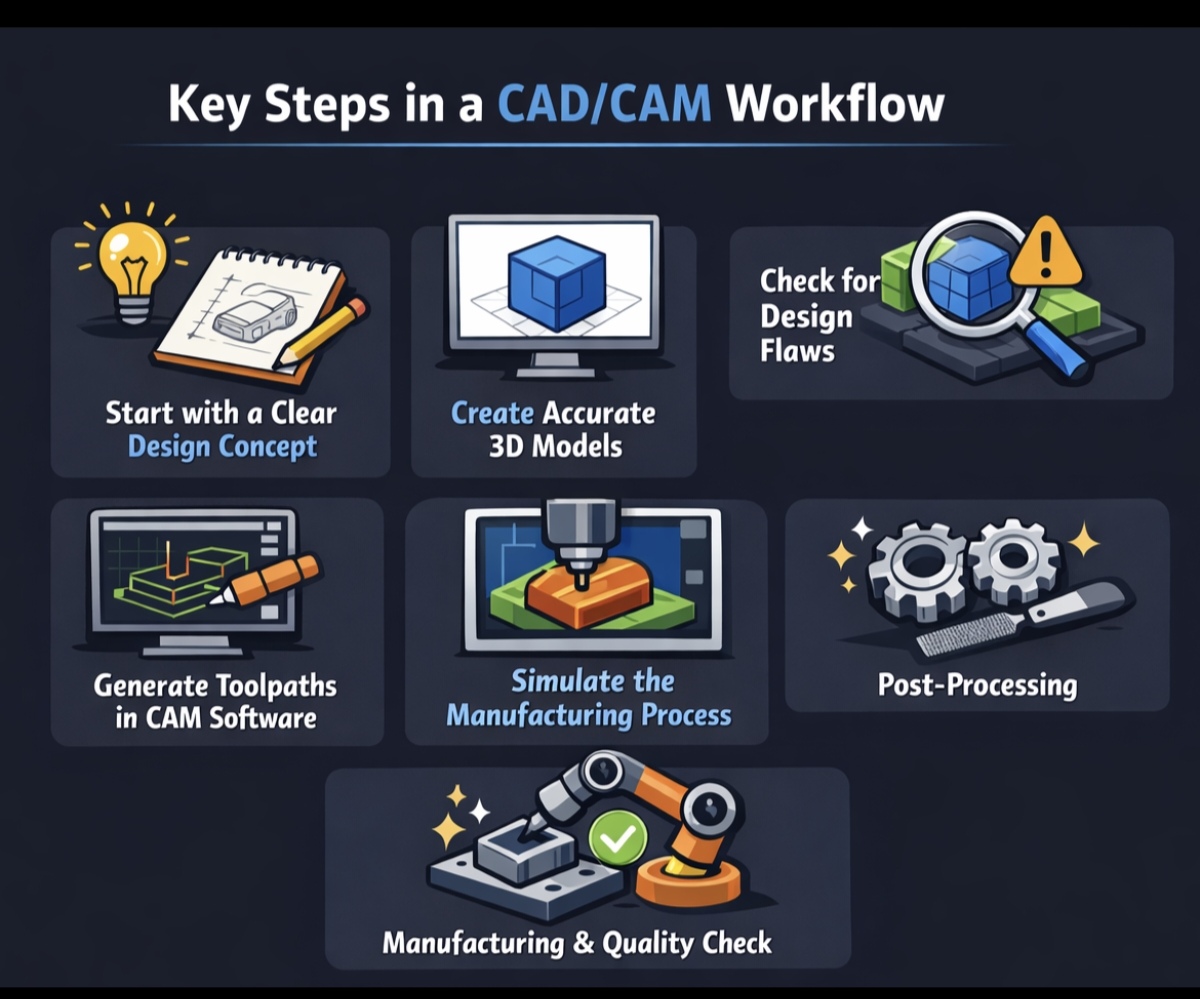
Today’s manufacturing process relies on seamless digital handoffs from design to simulation to production. But engineers spend more time fighting data than designing – converting CAD files, repairing geometry and prepping meshes all take time away from designing. This is how Spatial pitches itself: not as a one modeling tool, but a complete set of 3D SDKs for CAD import, visualization, modeling, meshing and data prep, with the aim to preserve geometry and design intent as it flows between engineering, simulation and manufacturing systems.
The core of the problem
The most common CAD, simulation (CAE), and manufacturing (CAM) tools are separate platforms, and transferring a model between them typically results in data loss, costly extra licenses, and manual conversion. It is particularly painful to prepare models for simulation – cleaning up geometry and defeaturing can take more than half of an engineer’s productive time before any real analysis is even started. The problem with relying on a mix of open-source tools or single-vendor black boxes is that one is difficult to maintain while the other is unflexible and expensive.
Spatial’s methodology
Rather than selling individual components, Spatial is positioning itself as a full stack partner:
3D InterOp reads/writes major CAD formats (CATIA, SOLIDWORKS, Creo) with exact geometry, assembly structure and metadata.
Data Prep automatically heals and simplifies imported geometry, saving manual cleanup
The geometric modeling kernels are 3D ACIS Modeler and CGM Modeler.
AGM integrates these into a single application framework with visualization tools to review and validate designs
Instead of simply shipping generic tools, the company presents itself as a “solution advisor” that assists customers in choosing and combining the right APIs for their particular workflow.
Real-life example
Kawasaki Heavy Industries, using some of Spatial’s tools (CGM Modeler, 3D InterOp, HOOPS Visualize, AGM), developed its neoROSET robot programming platform to tackle issues such as inconsistent CAD translation and geometry gaps, and to improve visualization for robot path validation.
The piece concludes by framing the value of Spatial as the blend of a comprehensive integrated toolset and hands-on technical support and domain expertise — not just software, but a long-term collaborative partnership.