
Study, Thermodynamics

How Pressure Cooker Works?

If the pressure of a substance is increased during a boiling process, will the temperature also increase or will it remain constant? Why? Ans: If the pressure of a substance increases during a boiling process, the temperature also increases since the boiling (or saturation) temperature of a pure substance depends on pressure and increases with […]

Study, Thermodynamics

Basic Terms to Know Before Starting Thermodynamics

Classical and the statistical approaches to thermodynamics: Classical thermodynamics is based on experimental observations whereas statistical thermodynamics is based on the average behaviour of large groups of particles. The light-year: In this unit, the word light refers to the speed of light. The light-year unit is then the product of a velocity and time. Hence,

Heat Engine, Thermodynamics

What is a Jet Engine

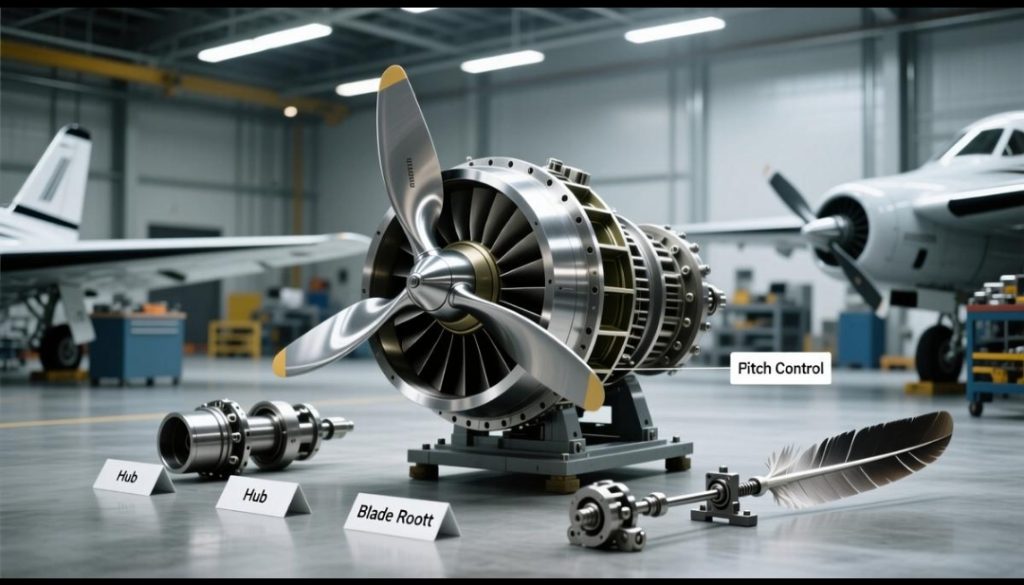
A jet engine is a reaction engine that produces thrust by expelling high-velocity gases through a nozzle. Turbojet engines operate on the open Brayton cycle, which consists of four continuous processes: intake, compression, combustion, and expansion (exhaust). Atmospheric air is drawn into the engine and compressed by the compressor, mixed with fuel, and burned at

Fluid, Fluid basis, Fluid Dynamics

Triangular Notch (V-Notch)

Triangular V-notch weirs are a fundamental tool in hydraulic engineering, providing a cost-effective and reliable method for measuring flow in open channels. Accurate flow measurement is essential for managing water resources, monitoring the environment, and conducting hydraulic research. These weirs operate on the principle that the flow rate is related to the opening angle of

Fluid, Fluid basis, Fluid Dynamics

Flow through an Orifice Meter

An orifice meter is a flow measuring device that is very popular among other flow measuring instruments due to its design simplicity, cost efficiency and easy manufacturability to determine the discharge in single and multi-phase flow. This section will focus on the structure of an orifice meter and calculation method of coefficient of discharge of

Fluid, Fluid basis, Fluid Dynamics

LAMINAR AND TURBULENT FLOWS

If you have observed cigarette smoke, you may have noticed that it initially rises as a smooth, steady plume before beginning to fluctuate erratically as it moves upward. Similar behavior occurs with other plumes. This phenomenon mirrors observations in pipe flow: at low velocities, the flow is smooth and orderly, but above a certain critical

Fluid, Fluid basis

Incompressible Flow

The general conservation of mass equations can be further simplified for incompressible flows, a condition typically applicable to liquids. Since density (ρρ) is constant, it can be canceled from both sides of the general steady-flow relation, yielding: Steady, incompressible flow:∑inV˙=∑outV˙where V˙˙ is the volume flow rate. For a system with a single inlet and a single outlet, this

Fluid Dynamics

Acceleration Field

The fundamental conservation laws—such as the conservation of mass and the first law of thermodynamics—are formulated for a fixed-identity collection of matter, known as a closed system in thermodynamics. However, analyzing a control volume (or open system) is often more practical. This requires converting those fundamental laws into forms applicable to the control volume perspective. A direct analogy exists

Scroll to Top