

Theory:
Working steps of a 4-Stroke CI Engine:
- Suction Stroke – Only air enters the cylinder.
- Compression Stroke – Air is compressed to high pressure and temperature.
- Power Stroke – Fuel is injected and self-ignites due to high temperature.
- Exhaust Stroke – Burnt gases are expelled.
Brake Power is the actual usable power available at the crankshaft. It is calculated using torque and rpm.
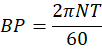
where,
= Torque (Nm)
= Engine speed (rpm)
Torque is produced by loading the engine using a rope brake or hydraulic dynamometer.
where,
- W = Load (N)
- L = Length of the brake arm (m)
(Watts)
Fuel mass flow (kg/s) measured using time to consume 10 cc:

where is mass of 10 cc of fuel (kg),
is seconds to consume 10 cc.
Fuel power (input) (kW):

where is calorific value in kJ/kg (since
in kg/s, product yields kW).
Specific Fuel Consumption (SFC) shows how much fuel is used to produce 1 kW of power.

Lower SFC = better fuel economy.
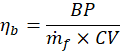
Brake Thermal Efficiency (BTE) indicates how efficiently the engine converts fuel energy into brake power.
Apparatus and Materials:
- 4-stroke CI (diesel) engine
- Rope brake / Hydraulic Dynamometer
- Fuel measuring burette (10 cc)
- Tachometer
- Stopwatch
- Measuring scale
Theory:
Working steps of a 4-Stroke CI Engine:
- Suction Stroke – Only air enters the cylinder.
- Compression Stroke – Air is compressed to high pressure and temperature.
- Power Stroke – Fuel is injected and self-ignites due to high temperature.
- Exhaust Stroke – Burnt gases are expelled.
Brake Power is the actual usable power available at the crankshaft. It is calculated using torque and rpm.
where,
T = Torque (Nm)
N = Engine speed (rpm)
Torque is produced by loading the engine using a rope brake or hydraulic dynamometer.where,
W = Load (N)
L = Length of the brake arm (m)⇒BP=602WπNL(Watts)
Fuel mass flow (kg/s) measured using time to consume 10 cc:m˙f=t10ccm10cc
where m10cc is mass of 10 cc of fuel (kg), t10cc is seconds to consume 10 cc.
Fuel power (input) (kW):Pfuel=m˙f⋅CV
where CV is calorific value in kJ/kg (since m˙f in kg/s, product yields kW).
Specific Fuel Consumption (SFC) shows how much fuel is used to produce 1 kW of power.SFC=BPm˙f
Lower SFC = better fuel economy.
Brake Thermal Efficiency (BTE) indicates how efficiently the engine converts fuel energy into brake power.ηb=m˙f×CVBP
Apparatus and Materials:
- 4-stroke CI (diesel) engine
- Rope brake / Hydraulic Dynamometer
- Fuel measuring burette (10 cc)
- Tachometer
- Stopwatch
- Measuring scale


